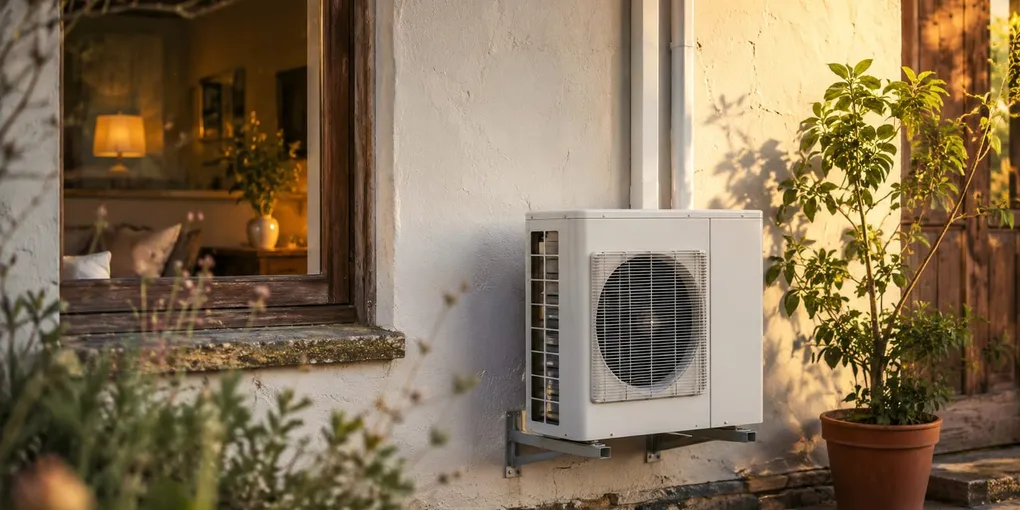
Air-Source Heat Pumps: What They Are, How They Work, Costs & Complete Guide
A machine that pulls heat out of freezing winter air sounds like a scam — somewhere between a perpetual-motion pitch and a late-night infomercial. It isn’t. It’s the same thermodynamics your refrigerator has been quietly running for decades, just pointed the other way. And that, in one line, answers what a heat pump is: an all-electric system that heats and cools your home by moving heat instead of burning anything.
The numbers behind the trick are just as persuasive. A whole-home installation typically costs $8,000 to $20,000 depending on size and ductwork, it retires both an aging furnace and the air conditioner in one move, and it can cut heating and cooling bills by up to 50% — with a federal tax credit of up to $2,000 to soften the sticker shock. This guide walks through how the physics works, what you’ll actually pay, what you’ll save, and how the incentives shrink the bill.
What is a heat pump?
A heat pump is an all-electric system that uses a refrigerant cycle to move heat rather than generate it through combustion. In winter it harvests warmth from the outdoor air — even cold air holds usable heat — and carries it inside. In summer the cycle flips and the same machine becomes your air conditioning. One system, both heating and cooling, which is why homeowners often retire two pieces of equipment the day it goes in.
That moving-not-making distinction is the entire economic argument. Because electricity only powers the transfer, a heat pump delivers 3 to 4 units of heat for every unit of electricity it uses. A gas furnace can’t touch that math, and electric baseboard doesn’t even enter the conversation — it will never hand you back more than the single unit you paid for.

How does a heat pump work?
Under the hood, it’s a closed refrigerant loop with four stops, repeating continuously:
- Evaporation: the refrigerant absorbs heat from the outdoor air and evaporates.
- Compression: an electric compressor raises its pressure and temperature.
- Condensation: it releases that heat to your home’s air or water and turns back to liquid.
- Expansion: a valve drops the pressure and the cycle repeats.
The compressor is the only piece drawing meaningful power. The heat itself rides along for free, which is where all that efficiency comes from.
Efficiency ratings: HSPF2 and SEER2
Shopping for one means wading through alphabet soup, so a quick decoder helps:
- HSPF2 measures heating efficiency over the season — higher is better.
- SEER2 measures cooling efficiency.
- COP describes instantaneous performance: a COP of 3–4 means 300–400% efficiency.
One myth worth burying: the idea that heat pumps quit at the first hard frost. Modern cold-climate heat pumps keep working efficiently even at 5 °F (-15 °C) and below, so the technology has outgrown its old reputation.
How much does a heat pump cost?
The honest answer is a range, because the ductwork question moves the total more than the equipment itself. This is how the installed price typically breaks out:
| Item | Typical cost (USD) |
|---|---|
| Equipment (air-source unit) | $4,000 – $8,000 |
| Labor & installation | $3,000 – $8,000 |
| Ductwork changes (if needed) | $2,000 – $6,000 |
| Total installed | $8,000 – $20,000+ |
Notice that labor can cost as much as the hardware. That’s not a corner to cut: the quality of the install — refrigerant charge, duct sealing, sizing — decides whether you ever see the rated efficiency on your bill.
Ductless mini-split systems for a single zone are the gentle entry point, starting around $3,500–$5,000, while whole-home ducted or multi-zone systems land at the higher end of the range.
A mistake that shows up constantly on replacement jobs: sizing the new heat pump to match the old furnace’s nameplate. Furnaces were routinely oversized, and an oversized heat pump short-cycles — it starts, stops, and never settles into the long, steady runs it was designed for. A good installer measures the house, not the old equipment.
How much does a heat pump save?
What you save depends almost entirely on what you’re replacing, and the worse your current system, the better this story gets:
| System replaced | Typical annual savings |
|---|---|
| Electric resistance / baseboard | up to 50% |
| Oil furnace | 30–50% |
| Older gas furnace + separate AC | varies by gas price |
Electric resistance is the easiest money on the table — every unit of heat you used to buy at full price, the heat pump now delivers for a fraction.
Savings ultimately hinge on your electricity and fuel rates. In many states, pairing a heat pump with rooftop solar pushes operating costs even lower, since you’re feeding the compressor with power you generated yourself.
Tax credits and rebates
Thanks to the Inflation Reduction Act, homeowners can stack several incentives:
- Federal tax credit (25C): 30% of the cost of a qualifying heat pump, up to $2,000 per year.
- HEEHRA rebates: up to $8,000 for heat pump installation for low- and moderate-income households (administered by states — availability varies).
- State and utility rebates: many utilities offer additional incentives.
To qualify, the equipment usually must meet ENERGY STAR efficiency requirements — which is why it pays to confirm the exact model number before signing, not after. Keep all invoices and use traceable payment; the paperwork is what turns a promise into an actual credit.
Permits and installation
Requirements vary by state, city and utility, so there’s no single national rulebook to memorize. Most installations need a permit and must be done by a licensed HVAC contractor, who handles the refrigerant (EPA Section 608 certification) and the electrical work. In practice your installer manages the permit — but it’s worth asking them to confirm, because an unpermitted install can come back to bite you at sale time.
Frequently asked questions
Do heat pumps work in cold climates?
Yes, and this is the objection that has aged the worst. Cold-climate (ccASHP) models maintain strong performance well below freezing, down to around 5 °F (-15 °C) or lower, thanks to enhanced compressor technology.
Do I need to upgrade my electrical panel?
Sometimes. Larger whole-home systems may need a 200-amp panel or a dedicated circuit, so have the installer check yours during the site visit — not on installation day. A single mini-split often runs happily on existing service.
How long does a heat pump last?
Plan on 15–20 years with regular maintenance — comparable to the equipment it replaces, except this one was doing two jobs the whole time.
Can one system heat and cool my home?
Yes — that’s the core of the pitch. The same unit heats in winter and reverses into air conditioning in summer, so you maintain one machine instead of two.
Is a ductless mini-split or a ducted system better?
Neither wins outright; it depends on your house. Ductless mini-splits shine in homes without ducts or for zoning specific rooms; ducted systems make sense for whole-home replacement where the ductwork already exists and is in decent shape.