Heat Pump vs Gas Furnace: Cost, Savings & Emissions
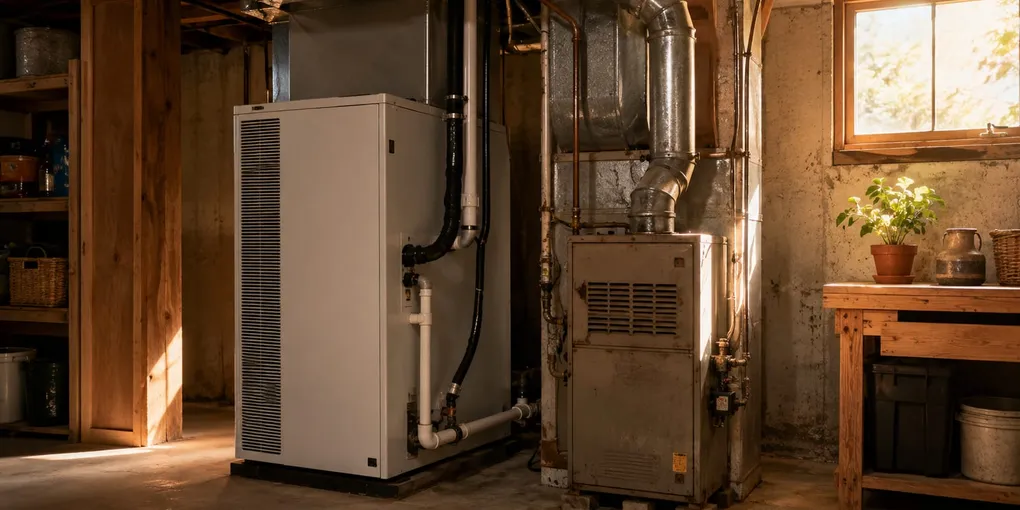
The gas furnace is not going quietly. It’s cheap to install, every HVAC tech in town knows it by heart, and it has a century of incumbency in the basement. Yet in the heat pump vs gas furnace matchup, the challenger wins the efficiency round by a landslide: a heat pump uses 40–60% less energy than a gas furnace, because it moves heat instead of burning fuel — delivering 3 to 4 units of heat per unit of electricity, with zero on-site emissions. What the furnace has left is one real argument: a lower upfront price. That’s the fight worth scoring carefully.
If you’re new to the technology, the complete heat pump guide covers the basics and the installation cost breaks down the numbers.
Efficiency: moving heat vs burning fuel
A high-efficiency gas furnace tops out around 90–98% AFUE — and that’s genuinely as good as combustion gets, because you can’t extract more heat from fuel than the fuel contains. A heat pump sidesteps that ceiling entirely. By moving heat from the outside air rather than creating it, it reaches seasonal efficiency of 300–400%+ (a COP of 3–4). For the same useful heat, it simply uses far less energy — though whether that shows up as dollars saved depends on your local electricity and gas prices, which is the honest asterisk on every comparison like this one.
Running cost and comfort
Lined up side by side with the oil furnace thrown in, the scorecard looks like this:
| System | Efficiency | On-site emissions | Also cools? |
|---|---|---|---|
| Heat pump | 300–400%+ (COP 3–4) | Zero | Yes |
| Gas furnace | 90–98% AFUE | Yes (combustion) | No (needs separate AC) |
| Oil furnace | 80–85% | High | No |
The last column is the one people overlook when comparing quotes: a heat pump replaces both the furnace and the air conditioner with a single system. If your AC is also near the end of its life, you’re not comparing one machine against one machine — you’re comparing one against two.
Upfront cost and payback
This is the furnace’s best round. A heat pump costs more to install ($8,000–$20,000 whole-home) than a gas furnace ($4,500–$9,000). But the gap is softer than it looks: the federal tax credit (up to $2,000) and utility rebates chip away at the heat pump’s price, and lower running costs do the rest wherever electricity is competitively priced.
A pattern anyone in the trade will confirm: the payback conversation is really about what you’re replacing. Crews get to skip the hard math when they’re hauling out an oil tank or ripping out baseboard heat — those swaps pay for themselves fastest, while a newish high-efficiency gas furnace in a cheap-gas market is the slowest case.
Frequently asked questions
Is a heat pump cheaper to run than gas?
It comes down to your local electricity-to-gas price ratio. Where electricity is reasonably priced — or you have solar feeding the meter — a heat pump usually wins, and remember it’s also covering your cooling, which the furnace never did.
What risks does it remove?
The ones that come with burning things indoors: no gas leaks, no carbon monoxide, no combustion at all. There’s simply no fuel in the house to go wrong.
Can I keep my furnace as backup (dual fuel)?
Yes, and it’s a sensible hedge. A dual-fuel setup runs the heat pump most of the year — when it’s at its most efficient — and calls in the furnace only on the coldest days.
Does a heat pump work in cold climates?
Yes. Cold-climate models keep strong output well below freezing, so the old “fine until January” objection no longer holds.